
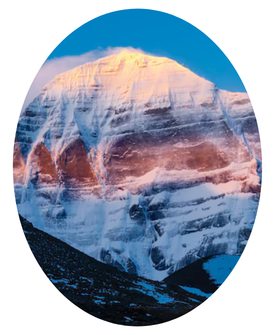

Kailash Mansarovar 2026!
HOW WE ARE BEST FOR TRAVEL !
We are passionately committed to total quality travel, with continual delivery of value added services. We uphold the highest ethical standards and believe in creating new high Service level." We, at BHAKTI ROUTE PREMIUM TOURS PVT LTD have gained a vast experience over a period15+ years & providing reliable, dedicated and friendly services to Nepal and Mt Kailash Mansarovar Travel.We do assure of all our reliable and caring services throughout your Tour as our team shall remain committed to making this auspicious trip very special and memorable forever. Holy Mount Kailash overland Tour via Kyrung is the one of the easiest and economic journey to Holy Mt. Kailash & Mansarovar Lake which start from Kathmandu, the capital city of Nepal. This yatra generally cover, Pilgrimage tour to Nepal covering Holy Pashupatinath temple before proceeding to Timure Border by surface. Yatries even can make their yatyra comfortable by using Helicpter from Kathmandu to Syabrubesi / Timure with extra cost USD 1500 for one way helicopter journey. From border onwards we will pass through Kyrung, Saga, Paryang before reaching to Holy Mansarovar lake. After puja Hawan , tarpan and personal purification at Holy Mansarovar lake , we further advance our yatra with Holy Mount Kailash Parikrama via Darchen, Dirapuk and Zuthulpuk. After completion of Holy Mount Kailash Yatra we will perform puja and Holy water offering in Lord Pashupatinath Temple. Bhakti Route Premium Tours Pvt Ltd invite all the lord Shiva Devotees to join this overland Yatra via Kathmandu and Kyrung during next yatra season from May to September 2026.
Kathmandu
Kathmandu is Nepal's vibrant capital, a bustling cultural and economic hub nestled in a high valley surrounded by the Himalayas, famous for its blend of ancient Hindu/Buddhist traditions, stunning temples (like Pashupatinath and Boudhanath), rich history, and a lively mix of modern city life and traditional Newari culture, serving as the primary gateway for tourists exploring the region's spiritual heritage and mountainous landscapes.
The Pashupatinath Temple is a premier UNESCO World Heritage site located on the banks of the Bagmati River in Kathmandu, Nepal, dedicated to Lord Shiva as the "Lord of Animals" (Pashupati). As one of the most sacred Hindu pilgrimage sites in the world, this 5th-century, pagoda-style complex is renowned for its intricate architecture, golden roof, and as a center for Hindu life-and-death rituals.
Nepalganj
Nepalgunj, a bustling sub-metropolitan city in Nepal's Banke District, serves as the primary commercial hub and gateway to western Nepal, particularly for tourists visiting Bardia National Park. Situated on the southern Terai plains near the Indian border, it acts as a major transportation junction with flights to remote, high-altitude regions like Jumla and Simikot.
Bageshwari Temple
located in the heart of Nepalgunj, Banke, is a revered Hindu temple dedicated to Goddess Bageshwari (Durga). Known as a significant Shaktipeeth, it is believed to be the site where Goddess Sati’s tongue fell. The complex is famous for its unique “mustachioed” Shiva statue and a large sacred pond.
Simikot
Which is the remote administrative headquarters of the Humla District in Karnali Province, northwestern Nepal, situated at an elevation of approximately 2,900 to 3,000 meters. It serves as a vital, high-altitude gateway for trekkers and pilgrims traveling to Mount Kailash and Lake Manasarovar in Tibet. Accessible primarily by air via a short runway, it offers stunning views of the Saipal and Nalakankad mountains.
Hilsa helipad
Which is a critical, high-altitude landing facility located in the remote Humla district of Nepal on the China-Nepal border, primarily serving as the main entry point for the Kailash Mansarovar Yatra. Situated at approximately 3,704 meters, this essential infrastructure supports tourism and emergency medical evacuations via Helicopter
Taklakot
also known as Purang or Burang, is a vital town and administrative center in the Ngari Prefecture of Tibet, China, situated at an altitude of approximately 3,900−4,7553 comma 900 minus 4 comma 7553,900−4,755 meters. Located near the Nepal border in the Sarayu Karnali River valley, it serves as a key trade hub and a major stop for pilgrims visiting Mount Kailash and Lake Manasarova
Lake Mansarovar
which is one of the world's highest freshwater lakes, located in Tibet's Ngari Prefecture at 4,590 meters (15,060 ft) near Mount Kailash. Renowned for its stunning, crystal-clear blue waters, this sacred, circular lake is a premier pilgrimage site for Hindus, Buddhists, Jains, and Bon followers, who believe it washes away sins
Darchen
Which is located at an altitude of approximately 4,670 meters (15,321 feet), serves as the essential base camp and gateway for the Mount Kailash Parikrama (circumambulation) and Lake Mansarovar pilgrimage in Tibet. It is a bustling, high-altitude settlement with guesthouses, restaurants, and shops, acting as the starting point for the 3-day, 52 km, or 38 km trek around the sacred peak
Yam Dwar (Gate of Yama)
Which is located at Tarboche near Darchen in Tibet, serves as the sacred starting point for the Mount Kailash Parikrama. Situated at ~4,860m (15,500+ ft), this "Gateway of the God of Death" is believed to be the entrance to Lord Shiva's abode. Passing through it symbolizes leaving behind earthly attachments and sins before embarking on the 52km trek
Zuthulpuk (also spelled Zutulpuk)
which is a crucial stop and monastery on the second day of the 3-day Mount Kailash Parikrama (Kora), located at an altitude of approximately 4,790 meters. It is the endpoint of the challenging 22km trek from Dirapuk over the Dolma La Pass (5,630m), offering a serene resting place after the most difficult day of the journey.
Mount Kailash
standing at 6,638 meters (21,778 ft) in the remote Tibetan Himalayas, is a highly sacred, unclimbed peak revered by Hindus, Buddhists, Jains, and Bon followers as the spiritual center of the universe (axis mundi). It is believed to be the abode of Lord Shiva and serves as a major, strictly prohibited-to-climb, pilgrimage destination.
Timure (or Timure/Syabrubesi) which is a critical stop on the overland route from Kathmandu to Kailash Mansarovar, serving as the final Nepali border settlement before entering Tibet via the Rasuwagadhi border crossing. It is primarily used as an overnight stop for pilgrims to rest and complete border formalities before heading into Tibet.
Saga
The journey from Saga to Lake Mansarovar is a vital, scenic, and challenging segment of the Tibet overland tour, covering approximately 450–496 km along the G219 National Highway in Tibet. It typically takes 7-10 hours by jeep or bus, often involving significant altitude changes to reach the lake, which is situated at an elevation of over 4,500 meters.

SAVE TIME
No need to surf Multiple Sites for packages, quotes, travel plans

MULTIPLE OPTIONS
Get Multiple Itineraries & Personalised Suggestions from our Travel agents

SAVE MONEY
Compare, Negotiate & Choose the best from multiple options

TRUSTED NETWORK
Of 200+ Hotels Reliable & Authentic Travel Guides in Kailash Mansarovar
Adi Kailash 2026!
Pithoragarh
Pithoragarh is having small Airport which is direct flight from Delhi . This town itself a picturesque Himalayan town in eastern Uttarakhand, India. Known as "Little Kashmir," it sits in the lush Saur Valley at an elevation of 1,650m, bordered by Nepal and Tibet. The region is renowned for ancient temples, trekking trails, and potential status as a UNESCO Global Geopark
Dharchula
This is Place where vehicle change for adi Kailash and Om Parvat .This small town picturesque Himalayan border town in the Pithoragarh district of Uttarakhand, India. Located on the banks of the Kali River, it sits directly across from the Darchula district of Nepal. You can cross the suspension bridge into Nepal through 100 miter ,simply by carrying an Indian Aadhar card
Nabhidhang
The primary base station and last motorable point for vehicles heading toward Om Parvat is Gunji. From Gunji, the motorable journey continues up to Nabhidhang, which serves as the final viewpoint and parking area for visitors
Nabi Village
Nabi Village is one of the last inhabited villages before the Indo-Tibetan border and serves as an important base for the Adi Kailash and Om Parvat pilgrimage. The village is home to the indigenous Rung (Shauka) community, known for its warm hospitality and rich cultural traditions. Surrounded by towering Himalayan peaks and lush valleys, Nabi offers visitors a unique opportunity to experience traditional mountain life while enjoying spectacular natural scenery.
Gunji Village
Gunji is a historic Himalayan village situated at the confluence of the Kuti Yankti and Kali Rivers. It serves as a major halt for pilgrims travelling to Adi Kailash, Om Parvat, and the traditional Kailash Mansarovar route. The village is surrounded by magnificent snow-covered mountains and alpine meadows, offering breathtaking views and a peaceful environment. Gunji also holds strategic importance due to its proximity to the Indo-Tibetan border.
Kuti Village
Kuti is one of the last villages on the Adi Kailash route and among the highest inhabited villages in Uttarakhand. According to local tradition, it is believed to have connections with the Pandavas during their final journey toward heaven. The village is surrounded by majestic Himalayan peaks, green meadows, and crystal-clear streams. It preserves the unique culture and traditions of the Rung (Shauka) community, making it an important cultural and spiritual destination.
Pandav Fort
Pandav Fort, located near Kuti Village, is believed to have been built or used by the Pandavas during their exile and final journey toward the Himalayas. Although much of the original structure has weathered over time, the site remains an important place in local folklore and Hindu mythology. Visitors can enjoy panoramic views of the surrounding valleys while exploring this historic landmark connected to the Mahabharata.
Kuti River
The Kuti River originates from the glaciers surrounding Adi Kailash and flows gracefully through Kuti Village before joining the Kali River. Its crystal-clear waters, rocky banks, and surrounding alpine landscape create one of the most scenic stretches of the pilgrimage route. The river is considered sacred by local communities and provides a peaceful setting for photography, relaxation, and appreciating the pristine beauty of the Himalayas.
Jolingkong Base Camp
Jolingkong is the final motorable destination and the base camp for the Adi Kailash pilgrimage. Situated at an altitude of approximately 4,600 meters (15,100 feet), it offers breathtaking panoramic views of the sacred Adi Kailash peak. Pilgrims gather here before proceeding to the nearby holy sites. The dramatic landscape of snow-covered mountains, glacial lakes, and vast valleys makes Jolingkong one of the most spectacular locations in the Kumaon Himalayas.
Parvati Sarovar
Parvati Sarovar is a pristine high-altitude lake located at the foothills of Adi Kailash. According to Hindu mythology, Goddess Parvati meditated and performed penance at this sacred site. The crystal-clear waters beautifully reflect the majestic Adi Kailash peak, creating a breathtaking view. Pilgrims offer prayers, meditate, and perform rituals along the lake's shores, believing its waters to be spiritually purifying.
Parvati Temple
Located beside Parvati Sarovar, the Parvati Temple is dedicated to Goddess Parvati, the divine consort of Lord Shiva. The temple is an important pilgrimage site where devotees seek blessings for happiness, harmony, and prosperity. Surrounded by the tranquil Himalayan landscape, the temple offers a deeply spiritual experience and is an essential stop during the Adi Kailash Yatra.
Gauri Kund
Gauri Kund is a sacred natural water body associated with Goddess Parvati. According to Hindu beliefs, this is the place where Goddess Parvati bathed and performed intense penance to attain Lord Shiva as her husband. The peaceful surroundings and crystal-clear waters make it one of the most revered places on the Adi Kailash pilgrimage route.
Adi Kailash
Adi Kailash, also known as Chhota Kailash, is one of the most sacred mountains in the Indian Himalayas and is believed to be the earthly abode of Lord Shiva and Goddess Parvati. Rising majestically amidst snow-covered peaks, the mountain resembles the revered Mount Kailash in Tibet and holds immense religious significance. Every year, thousands of pilgrims undertake the Adi Kailash Yatra to seek divine blessings and experience the profound spiritual energy of this holy destination. The surrounding glaciers, alpine meadows, pristine lakes, and serene Himalayan atmosphere make Adi Kailash not only a sacred pilgrimage site but also one of the most breathtaking natural landscapes in India.
Nabidhang
Nabidhang is one of the most spectacular high-altitude destinations on the Adi Kailash and Om Parvat pilgrimage route. Located at an elevation of approximately 4,200 meters (13,780 feet), it serves as the primary viewpoint for the sacred Om Parvat. Surrounded by towering Himalayan peaks and pristine valleys, Nabidhang offers breathtaking panoramic views of the snow-covered mountains. The area is rich in spiritual significance and provides an unforgettable experience for pilgrims and nature enthusiasts alike.
Om Parvat
Om Parvat is one of the holiest mountains in the Indian Himalayas and a unique natural wonder. The mountain is famous for a naturally formed snow pattern that resembles the sacred Hindu symbol **"ॐ (Om)"** on its rock face. This remarkable phenomenon appears without any human intervention and is regarded by devotees as a divine blessing from Lord Shiva. Located near the India–Nepal–Tibet border, Om Parvat is one of the eight sacred mountains mentioned in Hindu tradition and is a major highlight of the Adi Kailash Yatra. Thousands of pilgrims visit every year to witness this extraordinary symbol of faith and spirituality.
Kalapani
Kalapani is a picturesque Himalayan valley situated near the origin region of the Kali River. Surrounded by dense forests, alpine meadows, and snow-clad peaks, the area is known for its immense natural beauty and religious importance. Kalapani also holds strategic significance due to its proximity to the India–Nepal border. Pilgrims visiting Adi Kailash and Om Parvat stop here to offer prayers at the ancient Kali Temple and enjoy the serene Himalayan landscape.
Kali River
The Kali River, also known as the Sharda River in its lower reaches, originates from the Kalapani region of the Himalayas. It forms a major portion of the natural boundary between India and Nepal. The river is considered sacred and is deeply associated with Goddess Kali. Flowing through dramatic gorges and lush valleys, the Kali River enhances the breathtaking beauty of the Kumaon Himalayas and has supported the livelihood and culture of local communities for centuries.
Kali Temple
Located at Kalapani, the ancient Kali Temple is dedicated to Goddess Kali, the powerful manifestation of Goddess Durga. The temple is one of the most revered shrines in the region, where pilgrims seek protection, courage, and blessings before continuing their journey toward Om Parvat and Adi Kailash. Surrounded by the tranquil Himalayan landscape and the sacred Kali River, the temple offers a deeply spiritual atmosphere.
Vyas Gufa
Vyas Gufa is a sacred cave believed to be the meditation site of **Maharishi Ved Vyas**, the revered sage who compiled the four Vedas and composed the **Mahabharata**, the **Brahma Sutras**, and the **eighteen Puranas**. According to local tradition, Sage Vyas performed deep meditation and composed many of these sacred scriptures while residing in this cave. Located amidst the majestic Himalayas near Kalapani, Vyas Gufa is an important spiritual landmark that attracts pilgrims, scholars, and devotees seeking to connect with India's ancient spiritual heritage. The peaceful surroundings and historical significance make it one of the most revered stops on the Adi Kailash pilgrimage.
Manokamna Temple in Nabi Village
The Manokamna Temple in Nabi Village is a tranquil shrine dedicated to Lord Shiva and Goddess Parvati, located in the Vyas Valley of the Pithoragarh district in Uttarakhand. Sitting at an altitude of approximately 3,200 meters (10,500 feet), it serves as a popular, peaceful stop for pilgrims undertaking the Adi Kailash and Om Parvat Yatra.
Bhimtal
Bhimtal is a picturesque lake town in the Kumaon region of Uttarakhand, named after Bhima, one of the five Pandava brothers from the Mahabharata. The centerpiece of the town is the serene Bhimtal Lake, which is larger than the famous Naini Lake. Surrounded by lush green hills, the lake offers boating, birdwatching, and stunning reflections of the surrounding mountains. An island in the middle of the lake houses an aquarium and provides panoramic views of the tranquil landscape. Bhimtal is known for its peaceful atmosphere and serves as an ideal stop before entering the higher Himalayan region.
Kainchi Dham
Kainchi Dham is one of India's most revered spiritual destinations, established in 1964 by the renowned saint Neem Karoli Baba. Situated on the banks of the Kosi River amidst dense forests and rolling hills, the ashram attracts thousands of devotees from across the world every year. It is believed that sincere prayers offered here bring peace, blessings, and spiritual guidance. The ashram gained international recognition after visits by notable personalities such as Steve Jobs and Mark Zuckerberg, who were inspired by Neem Karoli Baba's teachings. The tranquil surroundings make it an ideal place for meditation and self-reflection.
Golu Devta Temple
Golu Devta is worshipped as the God of Justice in Uttarakhand. Devotees visit this sacred temple to seek justice, truth, and the fulfillment of their wishes. A unique tradition at the temple involves writing prayers or petitions on paper and tying them along with bells to the temple premises. Thousands of bells offered by devotees create a remarkable sight and symbolize fulfilled prayers. The temple reflects the deep faith of the Kumaoni people and is one of the most visited shrines in the region.
Jageshwar Dham
Nestled within a dense deodar forest, Jageshwar Dham is one of the oldest and most important temple complexes dedicated to Lord Shiva. The complex consists of more than 100 beautifully carved stone temples dating from the 7th to the 12th century. The main shrine is dedicated to Lord Jageshwar (Shiva), while other temples honor various Hindu deities. The peaceful surroundings, ancient architecture, and sacred atmosphere make Jageshwar Dham an important pilgrimage destination. Many devotees believe the site to be associated with one of the sacred Jyotirlingas.
ARE YOU READY TO TRAVEL? REMEMBER US !!
BOOK KAILASH MANSAROVAR PACKAGES 2026